
The Hidden Protagonist in 0BB and BC Modules: A Guide to the Four Families of PV UV Adhesives
Key points
Fingers keep getting finer and busbars are being dropped altogether; or the front loses every finger and all electrodes move to the rear. 0BB (zero busbar) and BC (back contact) are the two hottest terms on the module side in recent years, and both have brought the same material onto the module shop floor: UV-curing adhesive. 0BB fixing adhesives must be fast, tough and transparent, the home ground of acrylics and urethane acrylates; BC insulation adhesives must be hard, insulating and heat-resistant, the home ground of epoxy systems.
In conventional MBB and SMBB modules, ribbons are soldered onto busbar pads, and the solder joints themselves hold the ribbons in place. With 0BB and BC, solder alone is no longer enough: ribbons need something to position and fix them, and fingers of opposite polarity need something to isolate them.
This article covers three things: what a UV adhesive is; the properties and differences of the four families (acrylic, epoxy, epoxy–acrylic hybrid and urethane–acrylic hybrid); and how they are currently used in 0BB and BC modules.
01Why modules suddenly need UV adhesives
Start with the new problems the two new structures bring.
0BB (zero busbar): cells no longer have printed busbars, and ribbons lie directly on the fingers. Fingers are only on the order of 20–30 microns wide, the contact points are small and numerous, and the ribbon must be "pinned" to the cell so it does not shift before lamination. That is the job of the fixing adhesive (also called ribbon-bonding adhesive).
BC (back contact): positive and negative fingers alternate on the rear of the cell. Each ribbon can connect only one polarity, so where it crosses fingers of the other polarity it must be electrically isolated, or it short-circuits. That is the job of the insulation adhesive.
Why do both roles favour UV adhesives that "cure with a flash of light"?
- Fast: curing takes seconds, keeping pace with the stringer, with no long ovens.
- Cold: room-temperature cure adds no extra thermal stress to ever-thinner wafers.
- Clean: one-component and solvent-free, with no mixing and no solvent evaporation.
- Controllable: it cures only where light falls, giving a wide window for dispensing and printing, and nozzles rarely clog when the line stops.
According to adhesive suppliers' public catalogues, UV adhesives already have more roles in PV than these two: 0BB fixing adhesive, BC insulation adhesive, BC cell isolation adhesive, copper-plating protection adhesive and perovskite encapsulation adhesive all have dedicated products. This article focuses on the first two, the largest by volume.
02UV adhesive basics: four ingredients, two curing routes
A UV adhesive typically has four kinds of ingredient: oligomers form the backbone and determine most cured properties; reactive monomers dilute and adjust viscosity while taking part in the reaction; photoinitiators absorb UV light and start the reaction; and additives and fillers tune adhesion, thixotropy and shelf stability.
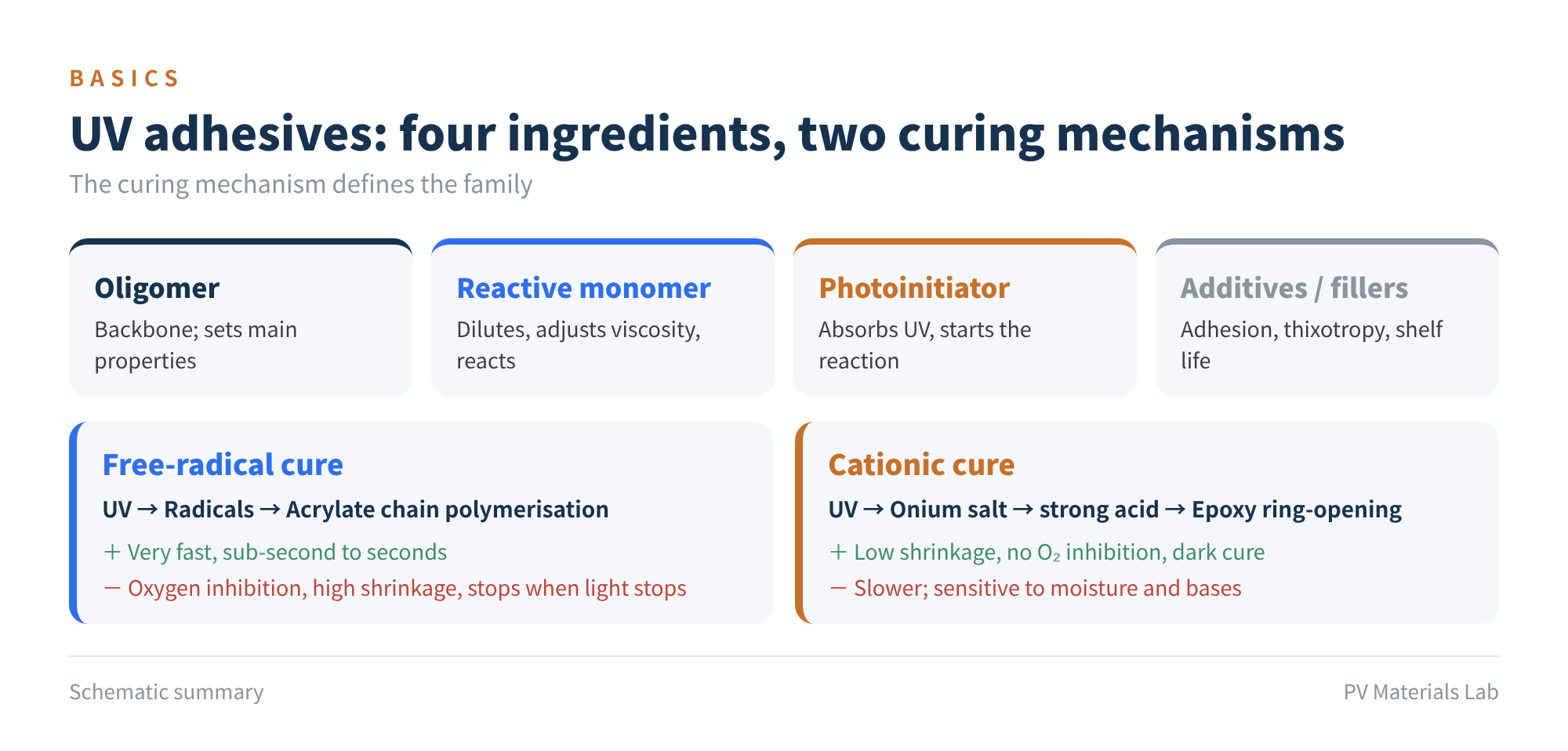
Figure 1 UV adhesives: four ingredients, two curing mechanisms
What really divides UV adhesives into different "families" is the curing mechanism.
Free-radical cure: the photoinitiator splits under light into free radicals, which start chain polymerisation of acrylate double bonds. It is extremely fast, but oxygen in air consumes radicals and leaves a tacky surface (oxygen inhibition); polymerisation of double bonds pulls molecules closer, so volume shrinkage is high; and once the lamp is off, the reaction essentially stops.
Cationic cure: onium-salt photoinitiators generate a strong acid under light, which starts ring-opening polymerisation of epoxy groups. Ring-opening gives low shrinkage, is not inhibited by oxygen, and once the acid is formed it keeps working, so curing continues after the lamp goes off (dark cure). The price is slower speed and sensitivity to moisture and basic substances.
All four families below can be understood as "which backbone + which curing route".
03The four families one by one
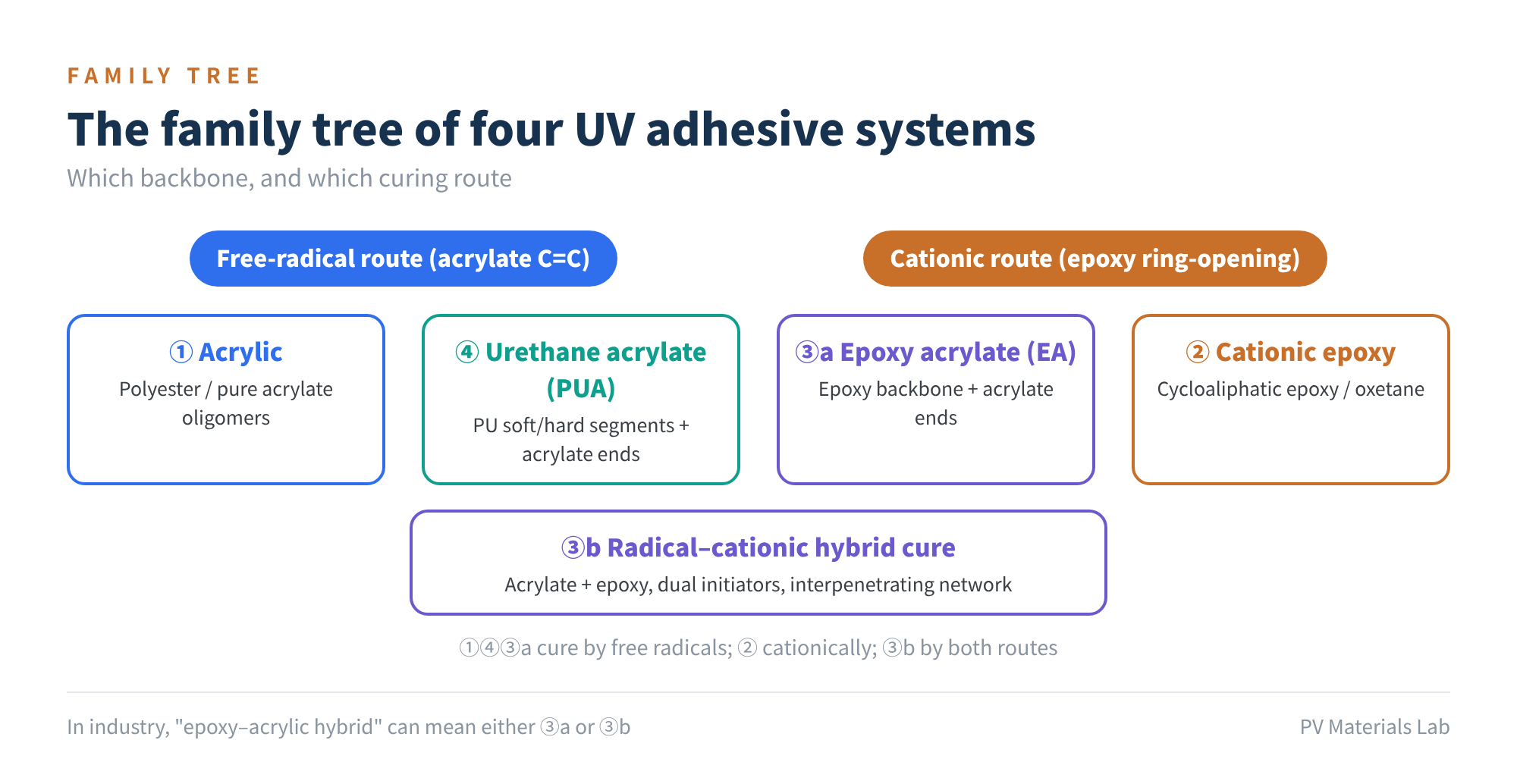
Figure 2 The family tree of four UV adhesive systems
① Acrylic: the quick-draw
Based on oligomers such as polyester acrylates and pure acrylates plus acrylate monomers, cured by free radicals. This is the most mature and highest-volume class of UV adhesive.
- Strengths: the fastest cure, from under a second to a few seconds under high-intensity LEDs; a very wide adjustable range of viscosity, hardness and modulus; high transparency, with good yellowing resistance for aliphatic structures; mature raw materials and the lowest cost; a good match with 365–405 nm UV LEDs.
- Weaknesses: oxygen inhibition, worse in thin layers; high cure shrinkage, commonly 5%–10%, with internal stress that hurts adhesion; only moderate adhesion to inorganic surfaces such as metals, glass and silicon nitride, needing adhesion-promoting monomers or silane coupling agents; moderate resistance of ester bonds to damp-heat hydrolysis; no cure in shadow areas that light cannot reach.
- Role in PV: the most common base system for 0BB fixing adhesives.
② Epoxy: slow and steady
"Epoxy" here means cationically photocured epoxy: based on cycloaliphatic epoxies and oxetanes with iodonium or sulfonium salt photoinitiators. It is a completely different chemical route from acrylics.
- Strengths: low ring-opening shrinkage of about 2%–4%; no oxygen inhibition and a dry surface; excellent adhesion to metals, glass and ceramics; high crosslink density, with strong hardness, heat and chemical resistance; good electrical insulation; dark cure, with post-heating raising conversion further.
- Weaknesses: slower cure, often needing a post-bake; moisture-sensitive, with high humidity markedly slowing cure; base-sensitive, as amines and some basic fillers or substrates "poison" it; brittle when cured, needing toughening for thermal cycling; onium salts absorb weakly under 395/405 nm long-wave LEDs and often need sensitisers; residual acid and ions are a potential corrosion risk for metallisation; higher cost.
- Role in PV: insulation, isolation and protection, where hardness, insulation and chemical resistance matter.
③ Epoxy–acrylic hybrid: the best of both
In industry this name actually covers two different things, so it is worth confirming which one is meant.
The first is epoxy acrylate (EA). Made by reacting epoxy resin with acrylic acid, it has an epoxy backbone (often bisphenol A type) and acrylate double-bond end groups, so it still cures by free radicals. It inherits the hardness and chemical resistance of the epoxy backbone with the speed of an acrylic, and is cheap; its drawbacks are brittleness, high viscosity, and poor yellowing resistance from the aromatic bisphenol A structure.
The second is radical–cationic hybrid curing. The formulation contains both acrylates and epoxies with two initiator systems, forming an interpenetrating network on cure. The acrylic part sets quickly, then the epoxy part strengthens it through dark cure or heat; shrinkage and adhesion fall between the two, and oxygen inhibition and moisture sensitivity partly offset each other. The price is a complex formulation and tighter demands on shelf stability and process window.
- Strengths: fast and hard, with good heat resistance, chemical resistance and insulation; lower shrinkage than pure acrylics; easy to make as UV + thermal dual cure, with areas the light cannot reach cured by subsequent heating.
- Weaknesses: brittle, with poor flexibility; aromatic backbones yellow easily, unsuitable for positions under long-term direct light; formulation and process control of hybrid systems is demanding.
- Role in PV: a common choice for BC insulation adhesives; also used in fixing adhesives that need shadow-area cure.
④ Urethane–acrylic hybrid: strength through flexibility
That is, urethane acrylate (PUA). A polyurethane prepolymer is first made from isocyanate and polyol, then capped with a hydroxyl-functional acrylate. The main chain is a polyurethane structure of alternating soft and hard segments with acrylate end groups, cured by free radicals.
- Strengths: the best toughness and elongation at break of the four, with resistance to thermal shock and fatigue; urethane bonds form hydrogen bonds for good adhesion; it stays flexible at low temperature; aliphatic types have excellent yellowing resistance; hardness can be finely tuned through polyol type and molecular weight.
- Weaknesses: high viscosity, needing more diluent monomer; slightly slower cure than epoxy acrylates; lower limits on hardness and heat resistance; polyether soft segments are weaker against thermo-oxidative and UV ageing, polyester ones against hydrolysis, and polycarbonate ones are best overall but expensive; aromatic types also yellow.
- Role in PV: used in 0BB fixing adhesives as a toughener or as the main resin, buffering the thermal expansion mismatch between copper ribbon and silicon.
That last point deserves expanding. Copper's coefficient of thermal expansion is about 17 ppm/K and silicon's only about 2.6 ppm/K, more than six times lower. As modules cycle between day and night outdoors, the adhesive dots are pulled back and forth every day. Adhesives that are too hard and brittle tend to crack or debond after TC testing, which is exactly where urethane acrylates come in.
04A side-by-side comparison
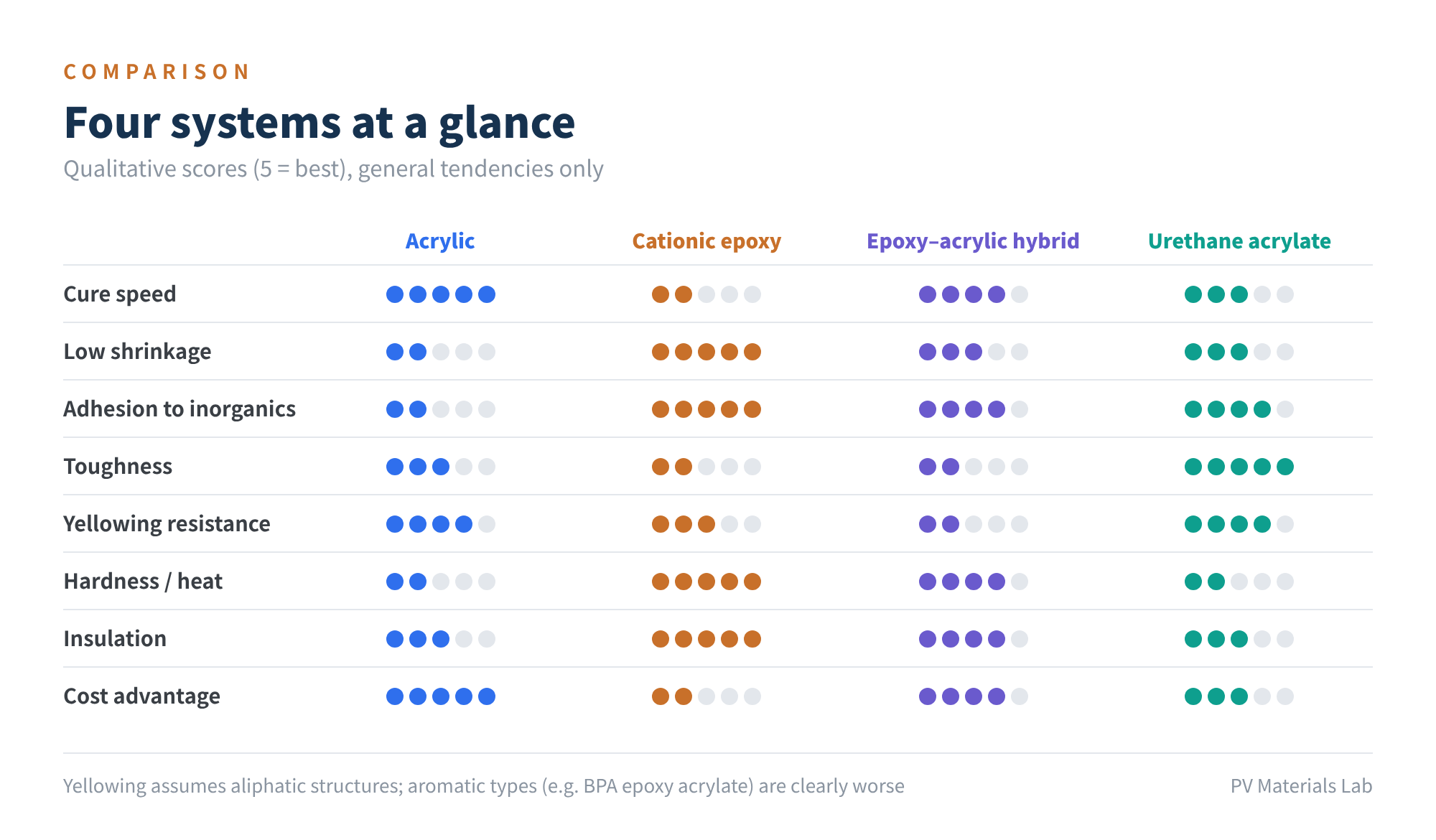
Figure 3 Four systems at a glance (qualitative scores, general tendencies only)
| System | Character in one line | Main thing to watch for |
|---|---|---|
| Acrylic | Fastest, cheapest, easiest to tune | Shrinkage stress, oxygen inhibition, no shadow cure |
| Epoxy (cationic) | Low shrinkage, strong adhesion, high insulation | Moisture and base sensitivity, brittleness, residual acid |
| Epoxy–acrylic hybrid | Fast and hard, chemical-resistant | Brittleness, yellowing |
| Urethane–acrylic hybrid | Flexible, resists thermal shock | Limits on hardness and heat, soft-segment ageing |
Table 1 The four systems in one line each
It is worth stressing that real products are almost never "pure-bred". A mass-produced fixing adhesive often combines acrylic monomers with urethane acrylate plus a little epoxy acrylate to adjust hardness. A system's name tells you what it is mainly based on and whose character it mostly shares.
050BB modules: the state of fixing adhesives
Three main routes, two of which use adhesive
Three 0BB interconnection schemes are discussed most publicly (plus SmartWire, which has higher process and material costs):
| Route | How it works | Characteristics |
|---|---|---|
| Adhesive dots | Adhesive applied between fingers and UV-cured to fix the ribbon to the cell; during lamination the ribbon's low-temperature alloy coating alloys with the fingers to conduct | No high-temperature soldering, simple process; the weakness repeatedly cited in public sources is ribbon-to-cell bonding strength and reliability |
| Soldering + adhesive | Ribbon soldered to fingers first, then reinforced with adhesive | Closest to the existing SMBB process, with upgradable equipment; a high-temperature process that demands precision |
| Film (e.g. IFC) | A carrier or skin film presses the ribbon onto the cell, alloying during lamination | No liquid adhesive, but adds film cost; ribbons can be finer |
Table 2 Three main 0BB interconnection routes
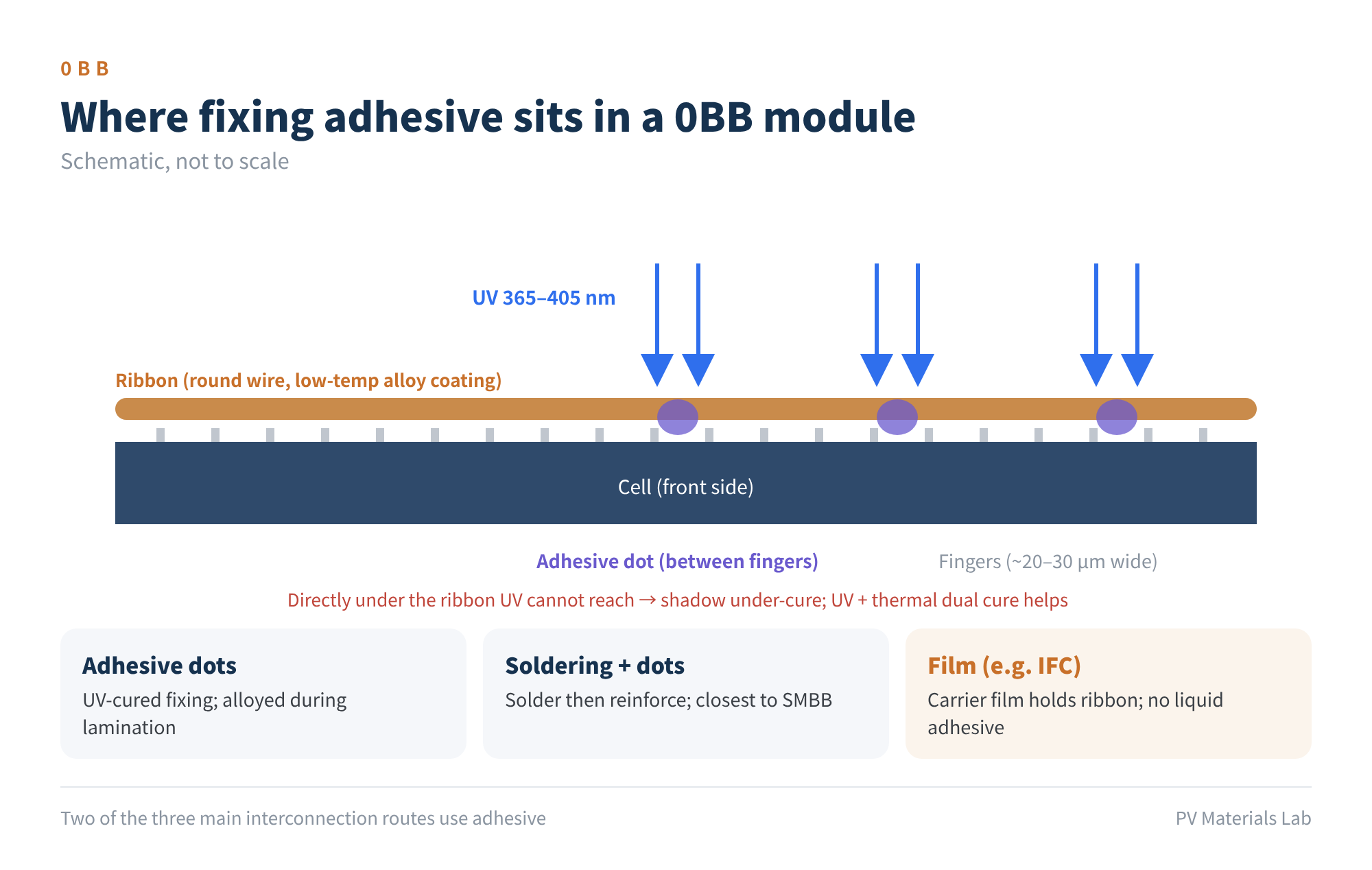
Figure 4 Where fixing adhesive sits in a 0BB module
The tests a good fixing adhesive must pass
- Fast: second-scale cure with a dry surface, so cell strings do not stick when stacked or handled.
- Small and precise: dots are sub-millimetre, requiring good thixotropy with no stringing, no slumping and no spreading onto fingers.
- Holds on: sufficient ribbon peel strength, without softening or flowing at 140–160 ℃ during lamination.
- Compatible with encapsulants: no gassing or delamination in contact with EVA, POE or EPE, and no bad reactions with encapsulant additives or flux residues.
- Weatherable: front-side dots sit under direct light for decades, so UV yellowing resistance is a hard requirement, along with passing damp heat, thermal cycling and humidity freeze.
- Non-corrosive: low ion content and acid value, with no corrosion of silver or copper fingers.
Choosing a system
Put together, these requirements point to "an acrylic base, toughened and given better adhesion by urethane acrylate": speed and transparency from the acrylic, thermal-cycling resistance from the polyurethane soft segments, and yellowing resistance from aliphatic structures. In public information, UV adhesives aimed at 0BB are also mainly acrylic.
Two further points are worth noting. First, UV and thermal-cure types coexist: several suppliers offer both acrylic UV adhesives and epoxy or silicone thermal-cure adhesives to suit different manufacturers' processes. Second, application is expanding from dispensing to printing: besides dot-by-dot dispensing by syringe or jet valve, screen-printing solutions have appeared to raise throughput.
One more easily overlooked detail: ribbons are opaque, so the adhesive directly beneath them gets no UV. That is why UV + thermal dual-cure formulations are attracting attention: the exposed part cures by light to fix the ribbon, and the shaded part completes curing with the heat of lamination.
Current state: routes coexist, no standard yet
From public information, HJT, with its low-temperature process and strongest push to cut silver, was the first to adopt 0BB as standard; 0BB is also gradually penetrating TOPCon. Routes differ between companies: JinkoSolar and Huasun have published soldering + adhesive schemes, Astronergy's ZBB modules use the film route, and film-type IFC technology is reported to be in scale use on BC, HJT and TOPCon.
For UV fixing adhesives, this is the biggest variable: whether the adhesive routes or the adhesive-free film route prevails directly sets the ceiling of this market.
06BC modules: the state of insulation adhesives
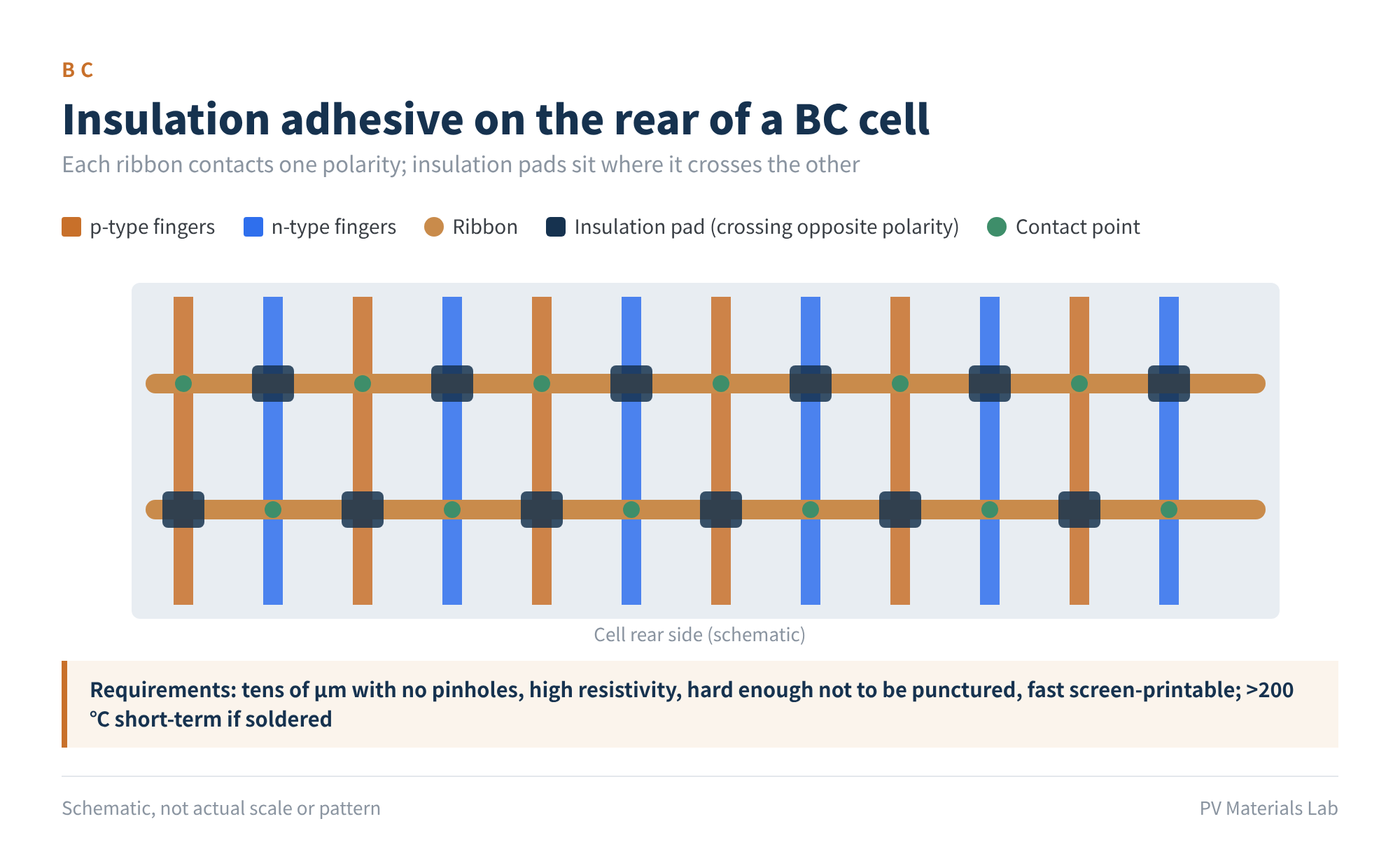
Figure 5 Insulation adhesive on the rear of a BC cell
On a BC cell, positive and negative fingers alternate on the rear, and ribbons are also laid out by alternating polarity. Each ribbon contacts only fingers of its own polarity, and where it passes over fingers of the opposite polarity it needs a layer of insulation adhesive underneath. The usual practice is to screen-print the insulation adhesive at the cell stage as dots or stripes, cure it, and then string or interconnect.
Requirements almost the opposite of fixing adhesives
- Reliable insulation: the layer is only tens of microns thick, must have no pinholes, and needs high volume resistivity and dielectric strength.
- Hard enough: during lamination the ribbon presses on the layer, which must not be punctured.
- Heat-resistant: if soldered interconnection follows, the layer must withstand short thermal shocks above 200 ℃ without softening or blistering; with low-temperature lamination interconnection this can be relaxed.
- Printable: suited to high-speed screen printing, with sharp pattern edges and no bleeding into adjacent contact areas.
- Firm adhesion: must bond to both the passivation film and the metal fingers.
- Long-term stability: passes damp heat, thermal cycling and PID, with low ion content.
Fixing adhesives seek speed, toughness and transparency; insulation adhesives seek hardness, insulation and heat resistance. And since all BC electrodes are on the rear, insulation adhesives receive far less UV than the front, so yellowing resistance can move down the priority list. Together these point naturally to epoxy systems: epoxy acrylate or hybrid UV adhesives cure fast and suit high-speed printing lines, while thermal-cure epoxies give more confidence on heat resistance and insulation margin.
Public product information bears this out: suppliers' BC module insulation adhesives come in both UV-cure and thermal-cure versions, both marketed on high hardness, high insulation, suitability for high-speed printing and low shrinkage.
Other adhesive uses on BC
- Cell isolation adhesive: used at the cell stage; must be transparent, very hard, sprayable or screen-printable, and compatible with heating steps in cell manufacturing.
- Copper-plating protection adhesive: patterned protection in copper-electrode routes; the key requirement is acid resistance.
- Fixing adhesive: BC combined with 0BB also needs ribbons fixed.
- Busbar insulation: "full-screen" designs that hide the busbars behind the cells place new demands on insulating materials.
Current state: BC ramps up, and so do adhesive uses
All BC interconnection is on the rear, and the asymmetric thermal stress of one-sided soldering tends to warp cells, so low-temperature interconnection is especially attractive for BC, which is good news for room-temperature-cure UV adhesives. AIKO launched a BC version of a 0BB module back in 2024, and an industry research firm's analysis in early 2026 noted that BC is adding gain features such as 0BB, overlap soldering and full-screen designs.
Capacity is growing too. On 2 July 2026, TCL Zhonghuan announced an investment of about CNY 2.6 billion to convert 20 GW of TOPCon cell capacity and 25 GW of module capacity to BC, with cell lines starting phased production from Q3 and full output expected by the end of Q1 2027. On the shipment side, LONGi sold 19.55 GW of BC modules in the first half of 2026, up 125% year on year and more than 60% of its module shipments. As BC shipments rise, demand for BC-specific materials such as insulation adhesives will grow with them.
07Quick selection guide and five common pitfalls
| Application | Main challenge | Typical systems |
|---|---|---|
| 0BB fixing adhesive | Fast, tough, non-yellowing, no shading | Acrylic + urethane acrylate; UV + thermal dual cure for shadow areas |
| BC insulation adhesive | Insulating, hard, heat-resistant, printable | Epoxy acrylate / hybrid UV adhesive; thermal-cure epoxy |
| BC isolation, plating protection | Chemical resistance, dry surface | Epoxy systems and their hybrids |
Table 3 Quick selection guide
For colleagues working on material introduction, the following matter more than system names:
- Looking only at initial adhesion. The real test of a fixing adhesive is retention after damp heat and thermal cycling; a high initial value proves nothing.
- Ignoring compatibility with the encapsulant. An adhesive that passes on its own may not be fine when laminated with the encapsulant. Bubbles, delamination and yellowing all need verification on mini-modules.
- Not controlling degree of cure. Monitor both UV dose and irradiance. LED decay and ribbon shadows both cause under-cure, and residual monomer can migrate or gas during lamination.
- Variation in adhesive volume and position. Adhesive spreading onto fingers raises contact resistance, a common source of dark EL spots in the 0BB dot-adhesive route.
- Ions and acid value. The effect on fingers of residual acid in cationic systems and of acidic adhesion promoters in acrylic systems should be verified with damp heat plus bias.
08Final thoughts
Looking ahead, five things are worth tracking:
- Dual cure will become more common, to solve ribbon shadows and deep cure in thick layers.
- Printing: moving from dot dispensing to screen and stencil printing for higher throughput and better consistency.
- New constraints from metallisation changes: as silver-coated copper, copper paste and copper plating gain share, adhesives' corrosiveness towards copper will be scrutinised more strictly.
- Compliance pressure: the widely used photoinitiator TPO was added to the EU's REACH Candidate List of substances of very high concern (SVHC) in June 2023, and export-oriented formulations are switching to alternatives.
- Route competition: the film route uses no liquid adhesive, and the balance between it and the dot-adhesive route remains the biggest uncertainty for fixing-adhesive demand.
Acrylics win on speed, epoxies on stability, epoxy–acrylic hybrids are fast and hard, and urethane–acrylic hybrids win through flexibility; once you understand what the job needs, the choice of system follows naturally.
What pitfalls have you hit when introducing UV adhesives for 0BB or BC? We would be glad to hear from you.
References
- Soochow Securities: "0BB helps TOPCon cut cost and raise efficiency, poised to scale up", Jun 2024 (in Chinese)
- Central China Securities: power equipment and new energy industry report (0BB films and adhesives section), Dec 2024 (in Chinese)
- Cailian Press: "Three mainstream technology routes for 0BB", May 2024 (in Chinese)
- 21st Century Business Herald: "Why are PV giants racing to invest in 0BB?", Apr 2024 (in Chinese)
- Bjx Solar: "0BB, PV's most anticipated micro-innovation", Jun 2025 (in Chinese)
- InfoLink: "Technological innovation amid solar PV industry restructuring", Feb 2026
- pv magazine: "TCL Zhonghuan converts 20 GW of TOPCon cell capacity to back contact", Jul 2026; PV Time: "45GW BC! TCL Zhonghuan Initiates PV Production Retrofit Programme"
- LONGi: 2026 interim report news release (BC module sales)
- Swedish Chemicals Agency (KemI): two substances updated with Candidate List reference (including TPO), 14 Jun 2023
- Public PV adhesive product information from suppliers including Shanghai Yuntong Electronics, Delangju and Nakexiu (in Chinese)
A PV R&D and technology team with 10+ years of experience | In-depth technical knowledge sharing
Materials · Reliability · Failure Analysis · Standards & Certification · Products · Processes
Exploring AI + PV; collaboration welcome
Disclaimer:
1. Original content reflects the authors' personal views only, is for reference only and does not constitute investment advice.
2. Reposted and cited content is credited to its source, out of respect for original work.
3. Some content was produced with AI assistance (chart generation, data retrieval, concept explanations, etc.); the core framework and key content were written by our technical team and reviewed by people.
4. If anything is inaccurate or infringes your rights, please leave a message or contact us and we will deal with it.